Cables for Power Transmission Application

Power transmission cables are the unsung heroes of our electrified world—the vital arteries that carry electricity from generation sites to homes, industries, and cities. While often out of sight, these engineering marvels represent some of the most sophisticated components in the electrical ecosystem. Unlike building wiring, transmission cables face extreme conditions: spanning hundreds of miles, crossing mountain ranges, submerging in oceans, and operating at voltages that can exceed 1,000,000 volts.
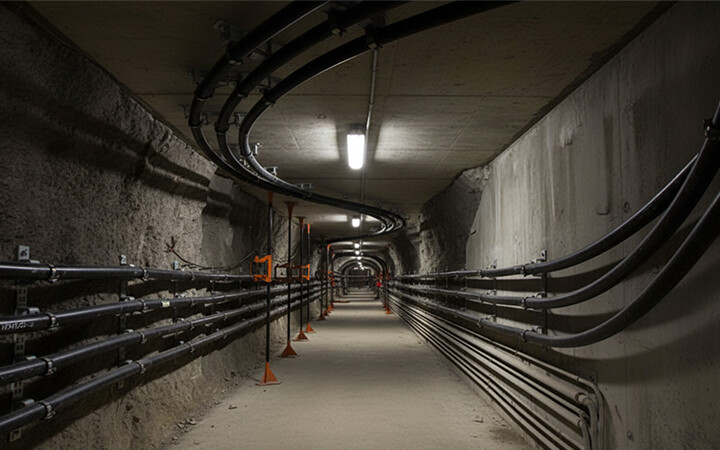
Modern transmission cables have evolved dramatically from the simple copper conductors of the early 20th century. Today's systems incorporate advanced materials science, sophisticated insulation technologies, and intelligent monitoring systems to maximize efficiency, reliability, and capacity while minimizing environmental impact.

Specialized Applications Transforming Energy Transmission

1. High-Voltage Direct Current (HVDC) Cables

The Long-Distance Power Champions

HVDC cables represent a quantum leap in transmission technology, enabling efficient power transfer over unprecedented distances with minimal losses.

Key Applications
  • Submarine Interconnections: Linking offshore wind farms to mainland grids (e.g., Dogger Bank Wind Farm connections)
  • Continental Grid Connections: Connecting asynchronous power systems between countries (e.g., NordLink between Norway and Germany)
  • Long Overland Routes: Transmitting renewable energy from remote generation sites (solar in deserts, hydro in mountains)
Technical Marvel: HVDC cables utilize extruded polymer insulation (XLPE) or mass-impregnated paper insulation, with special semiconducting layers to manage the intense electric fields. Modern voltage-sourced converter (VSC) technology has made HVDC increasingly viable for distances as short as 50-100 km.

2. Submarine Power Cables

Beneath the Waves: Engineering Against the Elements

Submarine cables face uniquely hostile environments—crushing pressures, corrosive seawater, shifting seabeds, and marine life—demanding extraordinary durability.

Specialized Design Features
  • Multiple Armor Layers: Galvanized steel wires provide mechanical protection against fishing gear, anchors, and seabed abrasion
  • Water-Blocking Systems: Special powders, tapes, and gels prevent longitudinal water penetration over kilometers
  • Advanced Monitoring: Distributed Temperature Sensing (DTS) and Distributed Acoustic Sensing (DAS) enable real-time health monitoring
Notable Projects: The 720-km North Sea Link (UK-Norway) and Australia's 900-km Basslink demonstrate the scale of modern submarine transmission.

3. Superconducting Cables

The Zero-Loss Future in Urban Environments

Superconducting cables, cooled to cryogenic temperatures (-200°C), offer virtually lossless transmission with 3-5 times the capacity of conventional cables in the same footprint.

Urban Applications Shaping the Future
  • City Center Upgrades: Delivering more power through existing rights-of-way without disruptive construction
  • Renewable Integration: Managing intermittent generation with high-capacity links
  • Fault Current Limiters: Protecting grid infrastructure by automatically limiting short-circuit currents
Current Deployments: Pilot projects in Chicago, Essen, and Seoul demonstrate 138kV systems capable of carrying several gigawatts, with commercial adoption accelerating as renewable penetration increases.

4. High-Temperature Superconductor (HTS) Cables

The Practical Revolution

Second-generation HTS cables using ceramic materials can operate at "warmer" temperatures (around -200°C vs. -269°C for conventional superconductors), dramatically reducing cooling costs and complexity.

5. Gas-Insulated Lines (GIL)

The Underground Solution for Ultra-High Capacity

GIL uses sulfur hexafluoride (SF6) or alternative gases as insulation, allowing compact, high-capacity transmission where overhead lines are impossible.

Where GIL Excels
  • Tunnel Applications: Transporting several GW under cities or rivers
  • Power Plant Connections: Short, ultra-high capacity links
  • SF6 Alternatives: New installations increasingly use environmentally friendly gas mixtures
Engineering Feat: The 400kV, 3.5km GIL under Geneva Airport handles 2,100MVA while occupying minimal space.

6. High-Temperature Low-Sag (HTLS) Conductors

Revitalizing Existing Corridors

HTLS conductors represent a transmission revolution without new towers—replacing conventional conductors on existing structures with advanced materials that carry 2-3 times more current with reduced thermal sag.

Material Innovations
  • Aluminum Conductor Composite Reinforced (ACCR): Aluminum-zirconium wires over ceramic fibers
  • Aluminum Conductor Composite Core (ACCC): Polymer composite core with trapezoidal aluminum wires
  • Gapped Conductors: Designed to optimize thermal expansion behavior
Grid Modernization Impact: Utilities worldwide are deploying HTLS to increase capacity on constrained corridors, often doubling transfer capability without regulatory delays for new rights-of-way.

Frequently Asked Questions (FAQ)

For HVAC cables, practical limits are typically 50-100 km due to capacitive charging currents that require reactive compensation. HVDC has no such limitation, making it preferred for longer underground/submarine routes.

HVDC has no capacitive charging current, allowing unlimited cable length. For distances over 50-80 km, HVDC becomes more economical despite converter station costs, and it's essential for connecting asynchronous grids.

Specialized cable repair vessels locate the fault using time-domain reflectometry, retrieve both ends, bring them to the surface, and splice in a new section. This complex operation can take weeks and cost millions, highlighting the importance of proper installation and protection.

Yes, through "reconductoring" with High-Temperature Low-Sag (HTLS) conductors. These advanced materials can double or triple capacity on existing structures, often the fastest and most economical capacity upgrade solution.

The decision balances cost (underground is typically 5-15x more expensive), capacity needs, environmental considerations, right-of-way availability, and public acceptance. Urban areas and sensitive crossings increasingly mandate underground solutions despite higher costs.

Methods vary: Direct burial relies on soil thermal conductivity, forced cooling uses circulating water or oil in separate pipes, and superconducting cables require cryogenic cooling systems using liquid nitrogen.

Transmission cables operate at higher voltages (typically 69kV+), carry power over longer distances between substations, and require more sophisticated insulation and monitoring systems. Distribution cables operate at lower voltages (typically <69kV) and deliver power to end users.

Properly designed and installed transmission cables have a design life of 40+ years. Many cables from the mid-20th century remain in service with proper maintenance and monitoring.

Modern practices minimize impact through careful route planning, horizontal drilling techniques, and increasingly recyclable materials. The industry is also addressing historical concerns like lead sheathing and SF6 gas use.

They are absolutely critical. Renewable resources are often located far from demand centers (offshore wind, desert solar). Efficient long-distance transmission is essential to decarbonize grids while maintaining reliability and affordability.