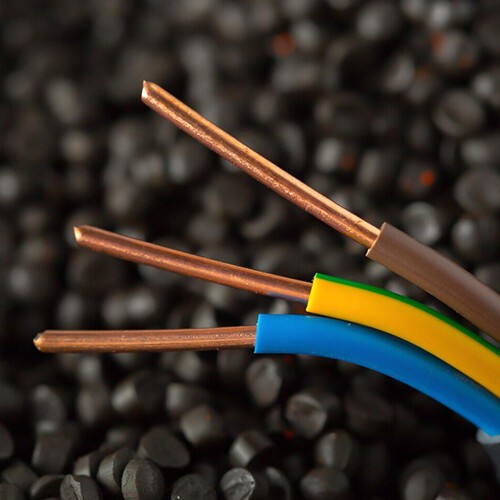
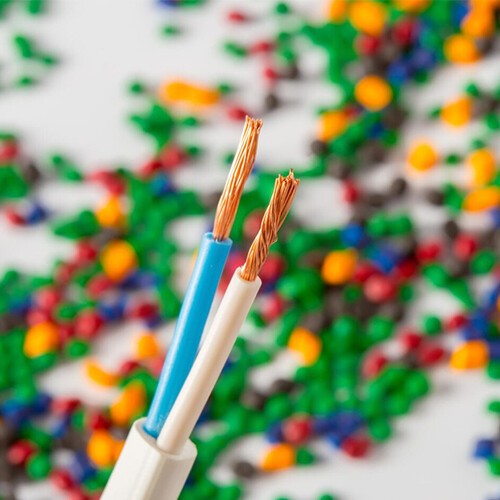
Aerial Bundled Cable (ABC) is an innovative and safe overhead power distribution system where multiple insulated conductors are twisted or bundled together. Unlike traditional bare wire systems, ABC provides a protected, compact, and reliable method for delivering electricity, especially in rural, urban, and densely wooded areas. Its superior safety and reliability have made it the global standard for modern overhead networks.
Why Choose Aerial Bundled Cable? Key Advantages
Enhanced Safety: Fully insulated conductors prevent accidental contact, reducing electrocution risks and fire hazards from tree contact or cable clashing.
Improved Reliability: Excellent resistance to short circuits caused by wind, animals, or falling branches. Minimizes outages and improves system stability.
Cost-Effective Installation: Lighter weight and bundled design require fewer supports (poles, crossarms). Easier and faster to install, reducing labor costs.
Aesthetic & Space-Saving: Neat, compact appearance with a smaller footprint. Ideal for congested urban and scenic areas.
Reduced Power Theft: The insulated design makes illegal tapping more difficult and detectable.
Low Maintenance: Resistant to environmental factors like corrosion, moisture, and UV radiation, leading to significantly lower OPEX.
Manufacturing Specifications of ABC
Aerial Bundled Cables are engineered with precision. Here’s a breakdown of their core components and specifications:
1. Conductors
Material: Typically AAAC (All Aluminum Alloy Conductor) or sometimes AAC (All Aluminum Conductor). AAAC offers higher strength-to-weight ratio, excellent for longer spans.
Class: Usually hard-drawn for mechanical strength.
Size Range: Commonly from 16 mm² to 150 mm² (e.g., 3x16+25 mm², 3x50+54.6 mm², 4x95+54.6 mm²).
2. Insulation
Material: Cross-Linked Polyethylene (XLPE) is the industry standard. It provides excellent:
Electrical insulation (typical voltage ratings: 0.6/1 kV, 1 kV)
Thermal endurance (up to 90°C continuous)
Weather, UV, and tracking resistance.
Thickness: Standardized as per IEC 60502 or relevant national standards (e.g., 0.7 mm to 1.4 mm depending on voltage and conductor size).
3. Messenger (Neutral/Supporting) Conductor
Function: Provides mechanical strength to support the entire bundle. Often also serves as the neutral conductor.
Material: Aluminum Alloy (AAAC) or Galvanized Steel Wire (GSW), sometimes with an XLPE sheath.
Construction: Can be bare, insulated, or weather-resistant coated.
4. Laying-Up (Bundling)
Conductors are twisted together with the messenger in a helical lay around a central core. This design ensures flexibility, uniform stress distribution, and ease of handling on reels.
5. Standard Colors
Phase Conductors: Red, Yellow, Blue (or Black)
Neutral Messenger: Bare, Black, or Blue
International & National Standards for ABC
Compliance with standards ensures safety, performance, and interoperability.
IEC 60502: (Intl) Power cables with extruded insulation for rated voltages from 1 kV to 30 kV.
IEC 61089: (Intl) Specification for round wire concentric lay overhead electrical stranded conductors.
ASTM B 231/B 232: (USA) Standard for aluminum conductors.
BS 7879: (UK) Specification for LV and HV ABC cables.
IS 14255: (India) Specification for ABC with XLPE insulation for working voltage up to 1100V.
AS/NZS 3560: (Australia/New Zealand) Standards for ABC cables.
Frequently Asked Questions (FAQ) About Aerial Bundled Cables
Q1: Can ABC be installed on existing utility poles?
A: Yes, in most cases. ABC’s compact and lightweight nature often allows for direct replacement of bare conductors on existing poles, sometimes even allowing for increased span lengths.
Q2: What is the typical lifespan of ABC?
A: A properly installed ABC system has a design life of over 30 years. Its XLPE insulation and alloy construction are highly resistant to environmental degradation.
Q3: Is ABC suitable for harsh weather conditions?
A: Absolutely. ABC performs exceptionally well in high humidity, coastal (salt fog), and heavily wooded areas. Its insulation protects against pollution-induced flashovers common with bare lines.
Q4: What tools are needed for ABC installation?
A: Specialized tension stringing equipment and roller assemblies are used to maintain the cables integrity during installation. Insulated cable grips, laying hooks, and dedicated accessories (ties, clamps, joints) are essential.
Q5: How does cost compare to traditional bare overhead lines?
A: While the initial cable cost per meter is higher, the total installed cost (TIC) is often lower due to savings on poles, crossarms, insulators, and labor. The significantly reduced lifetime maintenance costs make ABC highly economical.
Q6: Can ABC be used for street lighting?
A: Yes, specific ABC variants with integrated street lighting cores are available, simplifying urban infrastructure deployment.
Q7: How are faults located in an ABC system?
A: Faults are rare but can be located using standard cable fault locating techniques (TDR - Time Domain Reflectometry). The insulation helps contain faults, making them easier to isolate and repair.







 634
634


 Admin
Admin
 Jan 28 2026
Read More
Jan 28 2026
Read More